
How much does it cost to build an architect-designed house in Calicut?
What an architect actually charges in Kozhikode, what the build itself runs, and what shifts the number — written for people quietly planning a house in Kerala.
By Ar. Suhail AK · Co-founder & Principal Architect
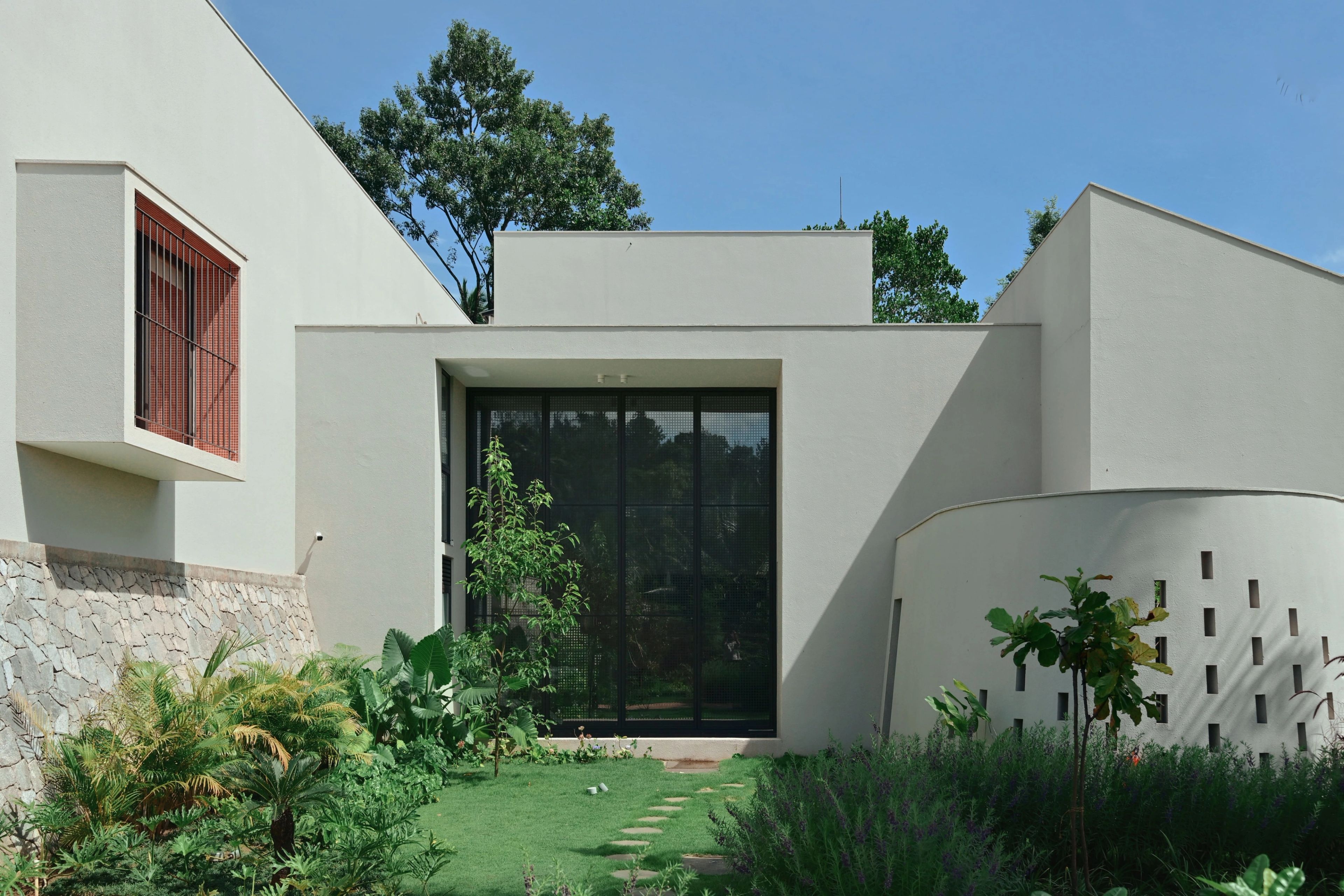
We get asked this on almost every first call. The honest answer is that there isn't a single number — there's a range, and where you land in that range depends on the site, the structural system, the finishes, and how much of the work you want one studio to see through. But we can do better than "it depends." Here is what the math looks like for a house designed and built by an architect in Calicut, in 2026.
Two numbers, not one
A house has two cost lines that often get confused — the architect's fee and the build cost. They're separate. The architect's fee is what we charge for design, drawings, and site supervision. The build cost is what the contractor charges to actually build it, plus materials.
In Kerala, architect fees for residential work typically sit between 6 and 10 percent of the build cost. Where you land depends on scope. A house where we do schematic design only and hand the rest to a draftsman comes in lower. A house where we draw every joint, supervise the site fortnightly, and oversee interiors and landscape is at the top of the range. Our own work is usually 8 to 10 percent, because we do all of it.
Build cost, per square foot
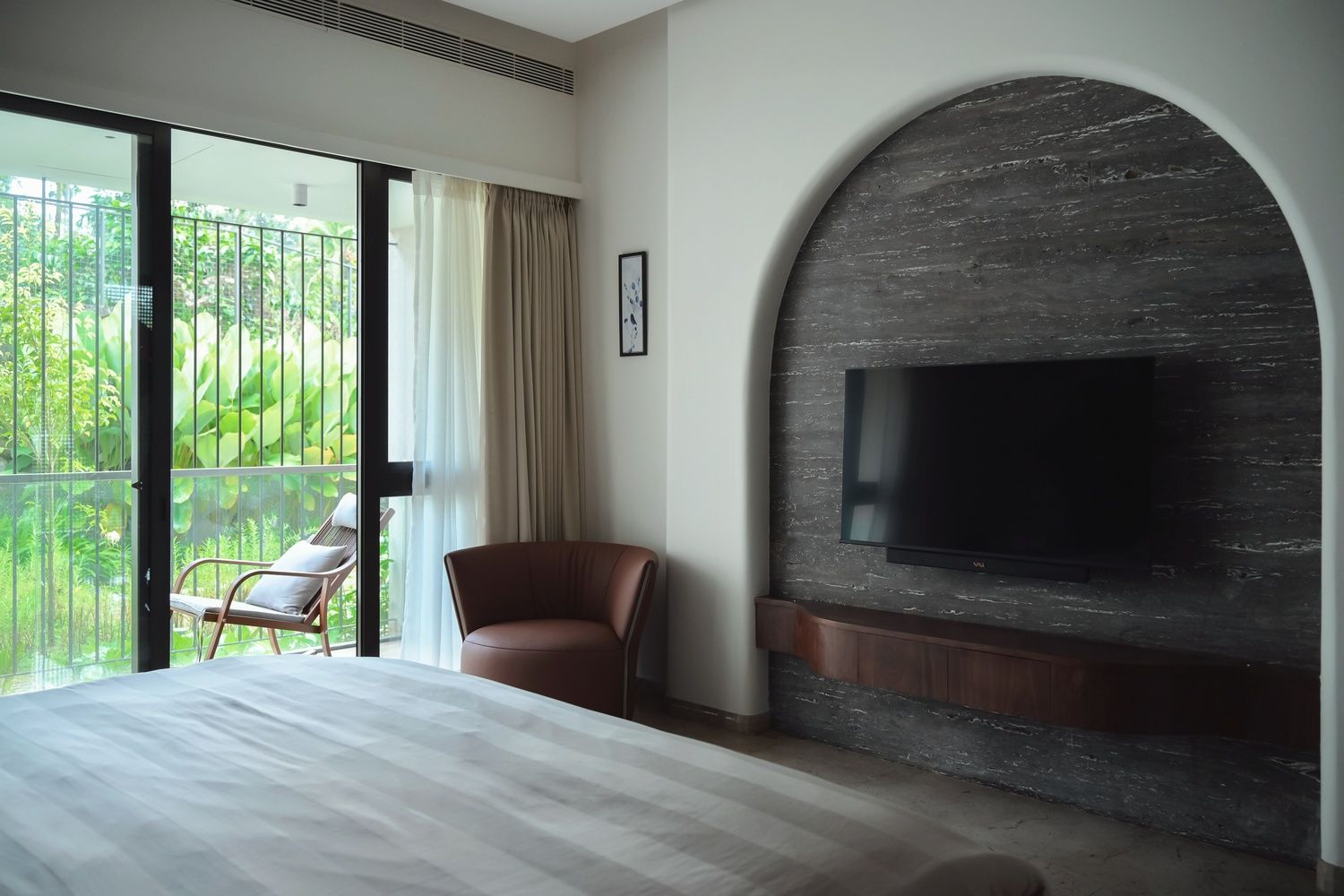
Build cost varies more than fees do. In Calicut today, a basic build — RCC frame, brick infill, standard tiles, modest finishes — runs roughly ₹2,000 to ₹2,400 per square foot. A mid-range house with better joinery, vitrified tile or oxide floors, decent sanitaryware, and some custom carpentry runs ₹2,800 to ₹3,800 per square foot. A premium build with imported finishes, full custom joinery, structural complexity, or extensive interiors can cross ₹5,000 per square foot, sometimes more.
For a 3,000 square foot house in Kozhikode at mid-range build quality, the build cost is roughly ₹95 lakh to ₹1.15 crore. Add 8 to 9 percent for the architect's fee, and the total comes to roughly ₹1.05 to ₹1.25 crore. That's the working number we'd put in a first-meeting conversation.
What moves the number
Five things shift the build cost more than anything else.
Site. A flat, road-front plot near the city is cheap to build on. A sloped plot, a plot with poor soil, a plot far from material sources — each adds to the cost. We've worked on hillsides in Wayanad that needed retaining walls before the house could begin; those alone added 10 percent.
Structural system. A regular RCC frame is the default. Once you add steel, large spans, cantilevers, double-height volumes, or a basement, the structural cost climbs sharply. Heritage-style construction with thick walls and tile roofs reads simpler but is often more expensive per square foot.
Finishes. The same plan can be built three ways — basic, mid, premium — and the finishes alone account for most of the gap. Italian marble versus local granite, custom teak versus rubberwood, brass hardware versus pressed steel. Each decision compounds.
Interiors. Most clients ask us to stay through interiors. A full interior package — joinery, lighting, soft goods, art — typically adds 25 to 40 percent on top of the build cost. It is not a small line item.
Time. The longer a build runs, the more it costs in finance and supervision. A house that should take 14 months and ends up taking 22 absorbs the difference somewhere — usually the contingency.
The cost of NOT working with an architect
We are obviously biased here. But the question we get most often is whether the architect's fee is worth it. The honest answer: on a small build with a competent contractor and standard expectations, maybe not. On anything else — a difficult site, an ambitious plan, a client who wants the house to feel resolved rather than assembled — the fee is usually the cheapest part of the project.
We've seen builds without architects come in 15 to 25 percent over budget because the contractor priced an early sketch and the actual house drifted. A worked-out set of drawings prevents that drift. We've also seen builds that came in on budget but were unlivable in the monsoon, or unbearable in April, because nobody studied the light or the wind. Those don't show up in the build cost — they show up later, every year, in the way the house refuses to be enjoyed. If you want a fuller picture of what we actually do across a residential project, the residential architects in Calicut page walks through it.
Contingency
Always carry 8 to 10 percent contingency on the total. Sites surprise you. So do governments. We don't draw against the contingency — it sits there in case the foundation needs an extra metre of fill, or the imported tap takes four months instead of two.
When to talk about money
At the first meeting. Before any drawing. We'd rather know your real budget than design to a number that isn't there, and then have to redraw when reality lands. Bring the plot, the brief, and what you can actually spend — we will tell you what is possible, and what is not, before we ask you to commit to anything.
Common questions on this topic.
- What is the cheapest a house in Calicut can be built for in 2026?
- A basic 1,500 sq ft house with RCC frame, modest finishes, and a competent contractor can be built for around ₹30 to ₹35 lakh in build cost as of 2026, plus the architect's fee. That assumes a flat, accessible plot and no significant interior work. Anything more complex moves the number up.
- Is an architect's fee negotiable in Kerala?
- Sometimes — but not as much as people expect. A reputable architect's fee covers staff, drawings, and site time that all has a real cost. We can scope the work down (schematic only, no supervision, etc.) if that's what's needed, but discounting the percentage on the same scope usually means we're cutting corners somewhere downstream.
- When do we pay the architect?
- In stages, against milestones. Typically: a small portion at signing, a portion at schematic design, a portion at design development, a portion when working drawings are issued, and the rest spread across construction supervision. Nothing is paid in advance for work not yet done.
- Does an architect-designed house actually cost less in the long run?
- Often yes, because the build is more accurate the first time, finishes are specified correctly, and the house actually works in the climate (which lowers running costs). But the savings show up over years, not on day one. The day-one number is higher than a contractor-only build.