
What does an interior renovation in Calicut actually cost?
Numbers we use in first conversations — for kitchens, full-house refits, single-room interiors. Honest ranges, what shifts them, and where most renovation budgets quietly leak.
By Ar. Suhail AK · Co-founder & Principal Architect
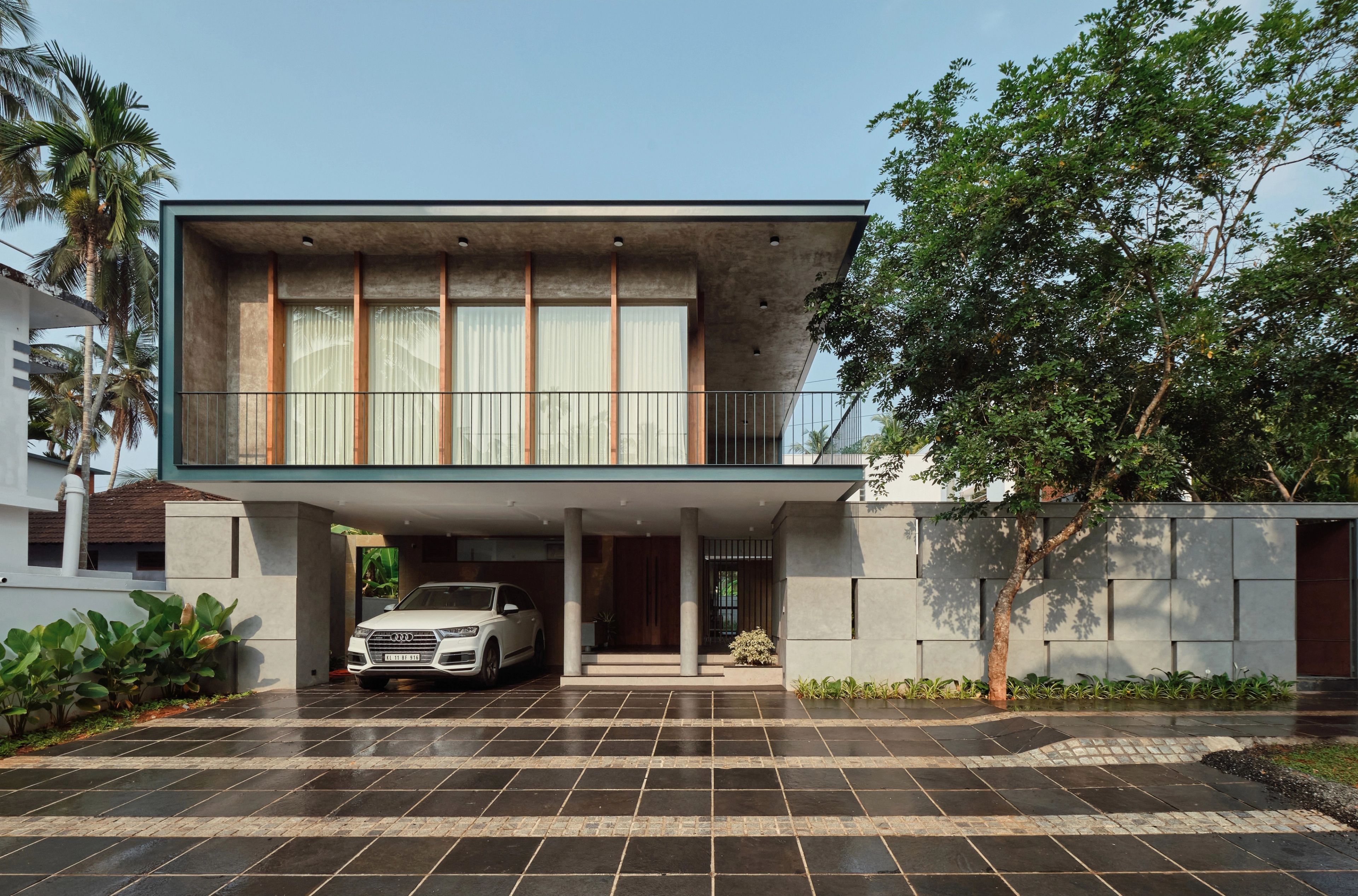
About a third of the studio's work is interiors — homes that are already built, that someone has lived in, that need to start working better. Less drama than a new house, but in some ways more difficult. You inherit decisions someone else made, and the cost depends on how many of them you want to undo.
Here are the numbers we use in first conversations, as of 2026.
Three kinds of interior project
Most enquiries fall into one of three brackets.
Single-room refit. A kitchen, a master bedroom, a study. Usually because the room isn't working — bad layout, dated joinery, wrong light. Typical budget: ₹4 to ₹12 lakh, depending on room size and joinery scope. We usually quote 8 to 10 percent design fee on top.
Full-house refresh. A house someone has been in for ten or fifteen years; the structure is fine but everything else needs reconsidering. Floors, joinery, lighting, soft goods, sometimes a small wall moved. Typical budget for a 2,500 sq ft house: ₹35 to ₹65 lakh, ex-design fee. Higher if a kitchen or bathroom is fully rebuilt.
Full interior package on a new house. The interiors of a house we have also designed, where we are picking everything from finishes to art. Typical add-on: 25 to 40 percent of the build cost. So a ₹1 crore house carries ₹25 to ₹40 lakh in interior cost.
The five things that move the number
Joinery. The single biggest line item in most interiors. Custom kitchens, wardrobes, dressing units, study desks. Built well, they last twenty years. Built cheaply, they sag in two. Joinery alone often accounts for 40 to 55 percent of a full-house interior budget.
Bathrooms. Bathrooms are silent budget destroyers. Stripping out a tile and sanitaryware set and rebuilding properly is rarely under ₹3.5 lakh per bathroom, and can cross ₹8 lakh once you add steam, custom vanities, and imported fittings. Two bathrooms in a renovation are routinely 15 percent of the total.
Floors. If you are changing the floor, you are also probably moving the skirting, the door bottoms, the AC outlets, sometimes the door swings. Floors don't change cheaply. Budget the floor decision honestly at the start.
Lighting. Often underestimated. A house that is properly lit — layered lighting, dimmer control, the right colour temperature, switching that doesn't fight you — costs real money. Allow 6 to 9 percent of the interior budget for lighting and wiring rework.
Soft goods. Curtains, upholstery, rugs, art. Easy to dismiss; easy to overspend on; easy to do badly. We try to specify a clear soft-goods allowance at the start so the studio voice carries through to the cushions, not just the walls.
Where the budget leaks
Three places, every time.
Decisions made twice. The client picked a tile, the contractor ordered something else, the wrong tile got laid. Half the floor is re-done at the client's cost. We see this on most projects without a designer running point.
Wishful thinking on the existing structure. "The pipes look fine" — until they aren't, and the wall is opened. "The wiring is okay" — until it isn't, and the whole circuit needs replacement. Carry a 12 to 15 percent contingency on any renovation. The older the house, the more.
Scope creep mid-project. The single most expensive sentence in any interior renovation is "while we're at it." Decide what you're doing at the start. Add nothing new without a written change order. Otherwise the budget walks away from you, and the timeline does too.
Timeline
A single-room refit usually takes 6 to 10 weeks once design is approved. A full-house renovation runs 4 to 6 months, sometimes longer if you're living in the house through it. Living-in adds about 30 percent to the timeline because work happens in phases — one floor or one wing at a time — rather than the whole house at once.
Working with a designer vs. without
On a small refit, you can probably do it without a designer if you have a good contractor and a clear taste. On anything larger — full house, multiple rooms, anything where joinery and lighting and finishes have to talk to each other — a designer pays for themselves in coordination alone. Most of what we save clients is not in clever ideas; it is in stopping bad ones before they get built. If you'd like a fuller picture of how we work on interiors, the interior designers in Calicut page is a good place to start.
When to start
Earlier than you think. Good interior design takes 6 to 10 weeks of design before any contractor walks in. Joinery alone is often 8 to 12 weeks of build after that. If you want a kitchen ready by Onam, talking to the designer in May is late.
Common questions on this topic.
- What's the minimum budget for an interior designer in Calicut?
- Most reputable studios don't take on full interior projects below ₹15 to ₹20 lakh in build value — the design effort is similar regardless of scale, and below a certain budget the fee makes the project uneconomic for everyone. Single-room consults can be more flexible.
- Can I just hire a contractor for an interior renovation?
- Yes, for small jobs. For anything where finishes, joinery, lighting, and floor coverings all have to coordinate, a designer is the cheaper option in practice — even with the design fee — because they prevent the costly mistakes.
- Do you do bathroom-only or kitchen-only projects?
- Yes, if the brief is interesting and the budget supports good work. We charge a fixed design fee for single-room projects rather than a percentage, because the math works out better at small scale.